10-Step Framework
Define the Agent:
1. What is the context? (A single patient? A cohort? A population? An org?)
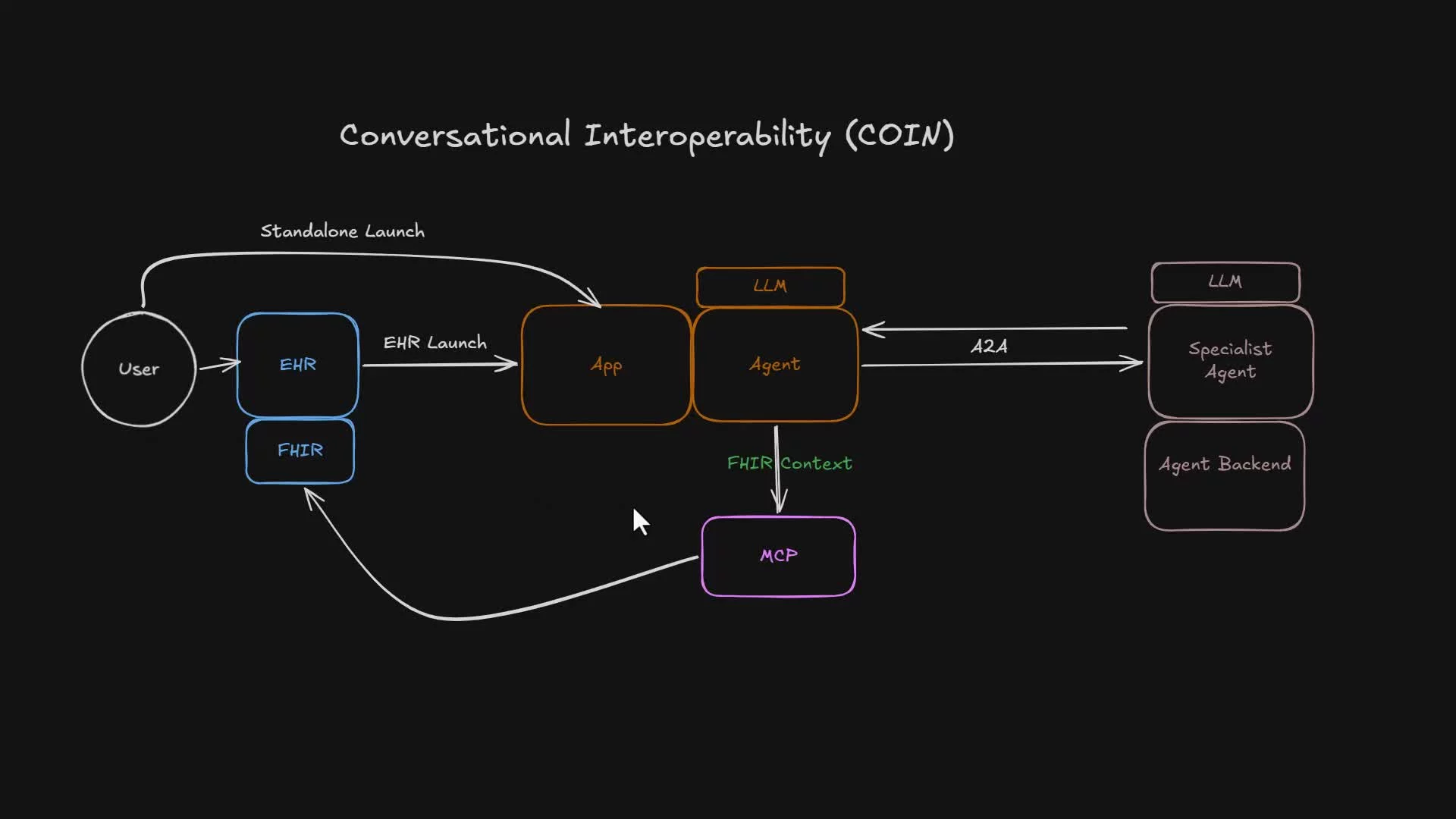
2. What data do you need, and how do you connect to it? (EHR, payer, pharmacy, patient-generated)
3. What grounding sources will the agent use?
Activate the Agent:
4. Deliverable - Agents can do a lot more than chat now. Think in 5 T's: Talk, Templates, Tables, Tasks, Transactions.
5. Consider both code and no-code options for building your agent. Where does Skills fit in?
6. How will the agent be launched - user or system?
Trust for Go-Live:
Building is the easy part. Getting it production-ready means tackling:
7. Identity: What permissions does your agent run under? System-level or delegated?
8. Evaluations: pre- and post-deployment. Don't forget that agents are non-deterministic
9. Guardrails: Why, What, and How of Runtime Safety.
10. Assemble
Single agents are just the beginning. There are multiple patterns, such as Menu, Consult, and Orchestrator, for implementing multi-agent solutions.